
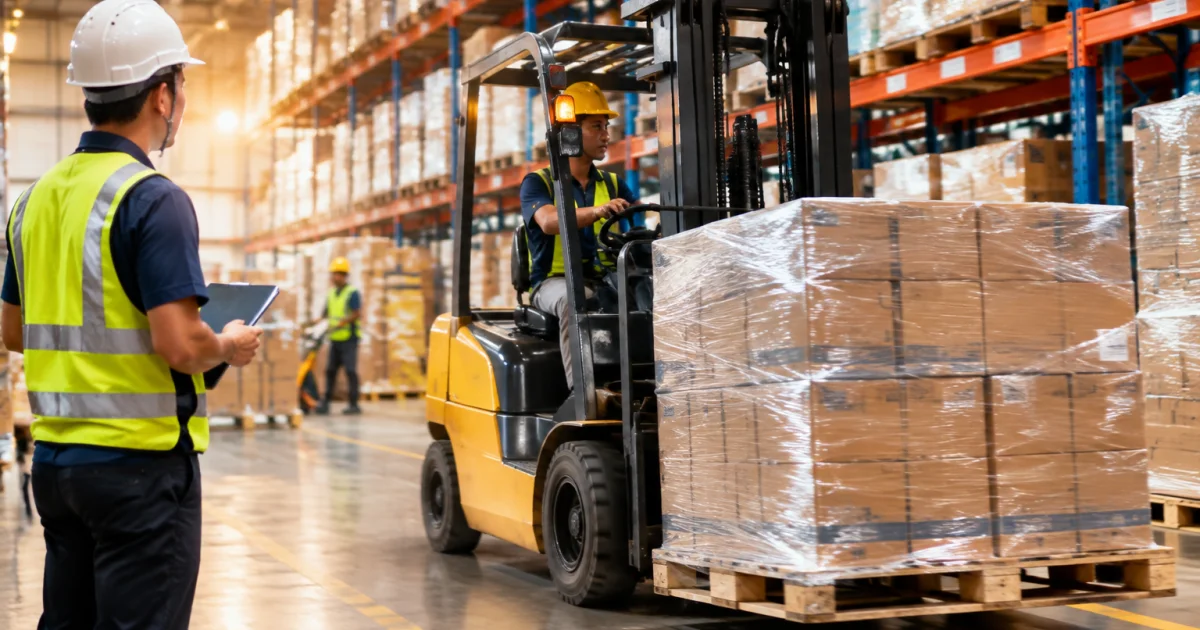
In warehouse reality, the “rent or buy” forklift decision rarely happens in a boardroom. It happens on the floor: a container arrives early, pallets stack up at inbound, a racking reconfiguration starts tomorrow, or your only working unit suddenly throws an error code mid-shift.
For those moments, Forklift Rental Penang isn’t just a procurement choice—it’s a continuity plan. My view (and I’ll label opinions clearly throughout) is that renting is often the more rational decision for short-term projects, breakdown coverage, and peak season surges, because it keeps your operation flexible and reduces the risk of owning the wrong machine at the wrong time.
That doesn’t mean buying is “bad.” Buying can be excellent when your utilisation is steady, your duty cycle is predictable, and you have the team and process to maintain the asset properly. But if your demand is uneven or your timeline is tight, renting typically beats buying on speed, adaptability, and cashflow control.
This article is written for warehouse managers, manufacturing supervisors, and logistics coordinators in Penang who need practical criteria—not generic theory. You’ll find decision triggers, examples, and a checklist you can use today.
Rent vs buy: start with the job, not the forklift
Fact: Forklifts are not interchangeable. A unit that is perfect for unloading containers may be a poor fit for high-level racking, tight aisles, fragile floors, or outdoor yard work.
Opinion: The biggest hidden cost in forklift ownership isn’t the purchase price—it’s misfit. When you buy, you commit to a configuration (capacity, mast type, tyre type, fuel/energy type, attachments, turning radius) that may not match your next project or next season’s workload.
Before you decide, define the job with operational detail:
- Load profile: weight, dimensions, stability, and whether the load shifts (e.g., drums, coils, long bundles).
- Lift height: ground-level only, truck bed, racking level, or mezzanine access.
- Surface and environment: smooth warehouse floor, ramps, yard, wet areas, dusty zones, or uneven terrain.
- Aisle constraints: narrow aisle turning, door widths, container access, slope limitations.
- Duty cycle: occasional lifts, continuous multi-shift movement, or short bursts during inbound/outbound peaks.
- Attachments: sideshift, fork positioner, carton clamp, drum clamp, boom, or special handling tools.
If you can’t confidently specify those items today, renting provides a safer path: you can match equipment to the real job, learn from the project, and avoid locking your budget into the wrong spec.
When renting clearly beats buying: 7 common Penang scenarios
Below are the scenarios where renting typically provides the best operational outcome. Some points are factual observations about how projects behave; the conclusion that “renting beats buying” is my opinion based on risk and flexibility.
1) Short-term projects with a defined end date
Fact: Many warehouse projects are time-boxed: racking installation, stocktake, layout changes, new line commissioning, or temporary overflow storage.
Opinion: If the project ends, the forklift requirement usually ends too. Renting avoids paying for idle time after the project.
Example: A manufacturer in Penang adds a temporary staging zone for a three-month production ramp-up. They need higher reach for selective racking and occasional pallet transfer between buildings. Renting lets them choose a forklift spec that fits the aisle width and lift height, and return it when the ramp stabilises.
2) Breakdown coverage (the “one unit down” emergency)
Fact: A single forklift failure can cascade into missed loading windows, overtime, and congestion at inbound/outbound.
Opinion: Renting is often the cheapest insurance when downtime costs more than the rental rate.
What matters is time-to-recover. Ownership only helps if you have a backup unit or rapid repair capability. Otherwise, a rental unit can stabilise operations while your forklift is being diagnosed and repaired.
Practical tip: Don’t wait until a breakdown happens. Pre-define a “breakdown response” process: who calls the rental provider, what capacity range you need, what access constraints exist, and where the unit can be delivered and deployed.
3) Peak season demand and end-of-month shipping surges
Fact: Many operations experience predictable surges: festive season orders, project deliveries, shutdown maintenance restarts, or export schedules.
Opinion: Buying equipment to cover your highest peak usually results in oversupply for the rest of the year.
Example: A 3PL supporting multiple customers in Penang sees volume spikes at quarter-end. A short-term rental fleet increases capacity without permanently raising fixed costs. When volume returns to normal, the fleet scales down.
4) Trialing a different spec before committing to ownership
Fact: Small specification differences can significantly affect productivity: mast type, tyre type, battery runtime, operator comfort, and turning radius.
Opinion: Renting is a smart “real-world test” that reduces buyer’s remorse.
Rather than buying a unit because it looks good on paper, rent a comparable specification for the exact environment where it will operate. Evaluate:
- Operator visibility and ergonomics in your racking layout
- Stability with your actual load dimensions
- Charging/fueling workflow impact on shift timing
- Floor impact (tyre marks, traction, vibration on uneven joints)
5) Temporary site constraints (ramps, low clearance, tight aisles)
Fact: Renovations, re-layouts, and construction around a facility can change access routes and clearances.
Opinion: Renting helps you choose a unit that fits the temporary constraint without permanently changing your fleet strategy.
Example: During a warehouse expansion, a temporary corridor reduces turning space. A smaller unit or different mast configuration may be needed for a few weeks. Renting avoids permanently compromising your fleet’s “normal” capacity.
6) High-risk lifts or unusual loads (attachments required)
Fact: Certain loads require specialised handling: long materials, delicate cartons, drums, or irregular crates.
Opinion: Renting the right attachment setup for a limited period is usually wiser than buying an attachment you rarely use.
If your job needs a clamp, boom, or specialised forks, rental can be the practical way to get job-specific capability—provided you communicate requirements clearly and confirm compatibility.
7) Cashflow protection when projects are uncertain
Fact: Some projects change scope mid-way: customer forecasts shift, shipments delay, or approvals move.
Opinion: Renting reduces financial exposure when uncertainty is high, because you can extend or stop without being stuck with an underutilised asset.
The real costs people forget when they compare rent vs buy
Many rent-vs-buy comparisons stop at monthly payment versus rental rate. That’s incomplete. A realistic comparison includes costs that are easy to overlook.
Ownership cost categories (beyond purchase price)
- Maintenance and wear: planned servicing, consumables, tyres, unexpected repairs.
- Downtime cost: delayed loads, idle labour, missed delivery windows, overtime recovery.
- Compliance and safety management: operator competence, site rules, safe operating procedures, and supervision.
- Storage/parking and charging/fueling infrastructure: space allocation, charging stations, ventilation, safe battery handling.
- Asset mismatch risk: buying the wrong spec for future jobs (capacity too low, mast too high, unit too large for aisles).
- Resale complexity: finding buyers, depreciation uncertainty, and timing the sale.
Opinion: Downtime and mismatch risk are the two most underestimated costs. If your operation can’t tolerate waiting for repairs or you frequently switch between job types, renting often provides better total value even when the rate looks higher on paper.
Rental cost categories you should plan for
- Transport to site: delivery and collection, access requirements for unloading.
- Rental period management: daily/weekly/monthly terms and extension rules.
- Damage responsibility: how site damage or misuse is handled (clarify upfront).
- Operator readiness: ensuring competent operators and clear site rules.
The goal is not to “make rental look cheap.” The goal is to avoid surprises and keep your operation running.
A practical decision framework: 10 questions that settle it fast
If you need to decide quickly, use these questions as a triage tool. If you answer “yes” to several of the rental triggers, renting is likely the better move.
| Question | If yes, it usually points to… |
|---|---|
| Is the job time-boxed (days to a few months)? | Rent |
| Do you need capacity immediately due to a breakdown? | Rent |
| Is this demand seasonal or peak-driven? | Rent |
| Are you unsure about the right capacity/mast/tyres? | Rent first (trial), then decide |
| Will the unit be underutilised after the project? | Rent |
| Do you have an in-house maintenance plan and downtime tolerance? | Buy can make sense if utilisation is steady |
| Does the job require special attachments you rarely use? | Rent |
| Does the job involve multiple sites or temporary access constraints? | Rent |
| Is capital budget tight or approvals slow? | Rent to start work now |
| Is this a stable, year-round function with predictable duty cycle? | Buy (or long-term lease) may win |
Opinion: The “rent first, then decide” approach is underrated. It converts assumptions into observations and makes the eventual buy decision more accurate.
How to specify a rental forklift correctly (so you don’t get the wrong unit)
The fastest way to waste money on rental is to request a forklift without specifying the operating conditions. A good provider will ask questions, but you should come prepared with the details that matter.
Minimum information to share in your enquiry
- Capacity required (and safety margin): include the heaviest load and how it’s handled.
- Load centre and dimensions: long loads shift the centre of gravity and change lifting performance.
- Lift height and mast type needs: especially if you’re stacking into racking.
- Indoor/outdoor split: and whether you have ramps, uneven surfaces, or wet areas.
- Tyre preference: based on floor and traction needs.
- Operating hours: single shift, double shift, weekend work, continuous throughput.
- Site constraints: narrow aisles, container loading, door heights, turning points.
- Delivery access: where the unit can be unloaded and staged.
- Attachments: sideshift, clamps, long forks, etc.
- Start date and duration: with expected extension likelihood.
Simple onsite checks before the forklift starts work
Fact: Most preventable incidents occur during the first days of a new workflow.
Do a quick practical verification:
- Test turning radius in the tightest aisle and at dock approach
- Confirm lift height for your highest pick location
- Run a trial with your actual load type (not an empty pallet)
- Confirm operator familiarity with controls and visibility blind spots
- Confirm where the unit will be parked safely and how it will be powered/charged
Where rental fits in a bigger material-handling plan (cranes, lorry cranes, and transport)
Warehouse work in Penang often connects to bigger moves: relocating machines, receiving heavy equipment, or shifting large crates from truck to staging. Forklifts are only one piece of the puzzle.
Opinion: If your project has any “heavy logistics” component, choose a provider that can coordinate multiple services. It reduces handover risk and scheduling gaps.
Situations where forklift rental is commonly paired with other equipment:
- Machinery arrival: A lowbed delivery drops at site, a crane lifts into place, and a forklift handles palletised accessories and secondary movement.
- Factory relocation: Forklifts support packing zones, staging, and day-to-day movement while heavy lifting teams handle the critical lifts.
- Yard constraints: When a forklift can’t safely reach a loading point, a lorry crane may assist with positioning loads closer to the warehouse entrance.
If you’re planning a project that also involves lifting or unusual access, it can be helpful to review related services such as crane rental or skylifts, boomlifts and scissorlifts when work at height (signage, piping, lighting, M&E) is part of the same shutdown window.
Short-term rental success in practice: three realistic scenarios
To make the decision criteria concrete, here are practical, Penang-style situations. These are illustrative examples (not performance claims) to show how renting can remove blockers and keep work moving.
Scenario A: Emergency coverage during a critical inbound week
A production site has one main forklift dedicated to inbound raw materials. It fails during a week of scheduled container arrivals.
- What breaks first without a backup: unloading slows, staging areas overflow, and QA receives late, which affects production timing.
- Why renting wins: speed. A rental forklift restores baseline capacity while the main unit is repaired.
- What to specify: load weights, container unloading needs, turning constraints, and operating hours.
Scenario B: Peak-season outbound with temporary labour
A distribution team increases headcount for a seasonal push. More pickers and packers are on the floor, but material-handling capacity becomes the bottleneck.
- Typical symptom: pallets queue at stretch-wrap and outbound docks because there aren’t enough forklifts to feed the line.
- Why renting wins: you add just enough equipment for the surge, then return it.
- What to watch: traffic management and pedestrian segregation, especially with new temporary staff.
Scenario C: Layout change and racking work during a shutdown window
A facility schedules a short shutdown to reconfigure racking and shift SKUs to new zones. Access is tight and routes change day by day.
- What makes buying risky: you may buy for a temporary constraint that disappears after the project.
- Why renting wins: you can match the unit to the temporary aisle layout.
- Project coordination: if heavy crates or machinery are involved, align forklift work with lifting/transport so crews aren’t waiting.
How to choose a rental provider (what matters in real operations)
Price matters, but it’s rarely the only decision factor when the forklift is a critical path item. If the unit doesn’t arrive on time, doesn’t match your load, or can’t be supported when something goes wrong, the cheapest rate becomes expensive.
What to evaluate (practical, not theoretical)
- Responsiveness: Can they handle urgent requests and changes?
- Fleet breadth: Do they have multiple capacities and configurations so you’re not forced into “whatever is available”?
- Safety and competence: Do they communicate operating limits clearly and support safe deployment?
- Logistics capability: Can they deliver and collect smoothly, especially when your site access is constrained?
- Ability to bundle services: If the project also needs lorry transport, lifting support, or relocation planning, can they coordinate it?
Fact (about Poh Seng Transport Sdn Bhd): The company has been established since 1986 and operates a large fleet of equipment. It also positions itself as a one-stop logistics solution across transport, lifting, and relocation services, with certified personnel (including CIDB, DOSH and OGSP-related requirements) and GPS-equipped trucks to support coordination.
Opinion: For BOFU decisions in Penang, “one provider who can coordinate” often reduces risk. Even if your immediate need is a forklift, the project frequently expands into transport planning, site access issues, or time-critical lift support. Having a partner that can scale up to lorry cranes, heavy lifting, and transport can make the difference between finishing on time and chasing vendors.
Conclusion: renting is the smart move when time, uncertainty, or peaks dominate
Buying a forklift can be the right long-term investment when the work is steady and predictable. But when the job is short-term, when a breakdown threatens continuity, or when peak season demand stretches your capacity, renting is usually the stronger operational decision.
The best approach is to decide from the job requirements: load, height, environment, duty cycle, and site constraints. If any of those variables are uncertain—or if your timeline is urgent—renting lets you start work immediately with a better chance of having the right equipment for the task.
If you want to reduce risk further, consider a “rent first” trial approach: use the rental period to validate the spec, confirm productivity, and learn what your operation truly needs before you commit capital to ownership.
Frequently Asked Questions
How fast can I arrange forklift rental in Penang for an urgent breakdown?
It depends on availability and your site readiness, but you can speed things up by sharing the load weight, lift height, indoor/outdoor use, aisle constraints, and the exact start time. Also confirm delivery access (where the unit can be unloaded) and who will receive it on site so deployment is not delayed.
What information should I provide to get the right forklift rental unit?
Provide (1) heaviest load and typical load dimensions, (2) required lift height, (3) operating surface and environment (warehouse floor, ramps, yard), (4) aisle width and turning constraints, (5) operating hours per day and number of shifts, and (6) any attachments needed such as sideshift, long forks, or clamps. This helps the provider match the forklift specification to your real job.
Is it better to rent or buy a forklift for peak season demand?
For seasonal or end-of-month surges, renting is often the better operational choice because you can add capacity only for the peak window and scale down afterward. Buying to cover the maximum peak can leave you with an underutilised asset during normal months, while still not guaranteeing you have the optimal spec for every surge.
Can forklift rental be coordinated with lorry transport or crane lifting for a bigger project?
Yes. Many site moves involve multiple steps: transport to site, lifting/positioning heavy items, and then forklift handling for palletised materials and staging. If your project involves machinery delivery or relocation, it can be more efficient to work with a provider that can coordinate transport services, lorry cranes, and crane rental alongside the forklift so schedules and access planning align.
Do you provide multi-axle low loader services in Penang for heavy equipment delivery?
For heavy machinery or oversized cargo, a multi-axle low loader is commonly used as part of the transport plan, often combined with lifting support at the receiving site. If your project includes equipment delivery plus onsite positioning, share the cargo dimensions, weight, pickup/drop locations, and any access constraints so the right trailer configuration and handling plan can be arranged.
Need a forklift fast for a short-term job in Penang?
Poh Seng Transport Sdn Bhd supports time-critical warehouse and industrial operations with forklift and mover services—plus transport, lifting, and project coordination when your job involves more than just one machine.
Tell us your load weight, lift height, site constraints, and timeline. We’ll help you match the right forklift rental setup for breakdown coverage, peak demand, or short-term projects.
Disclaimer:
We hope you found this article informative. The content is provided for general informational purposes only and does not constitute professional advice or fully represent the services offered by Poh Seng Transport Sdn. Bhd.
Readers are encouraged to consult a qualified industry professional or contact our team for solutions tailored to their specific project needs. While we strive for accuracy and completeness, we cannot guarantee that the information is entirely error-free. Poh Seng Transport Sdn. Bhd. assumes no responsibility for any errors or omissions.